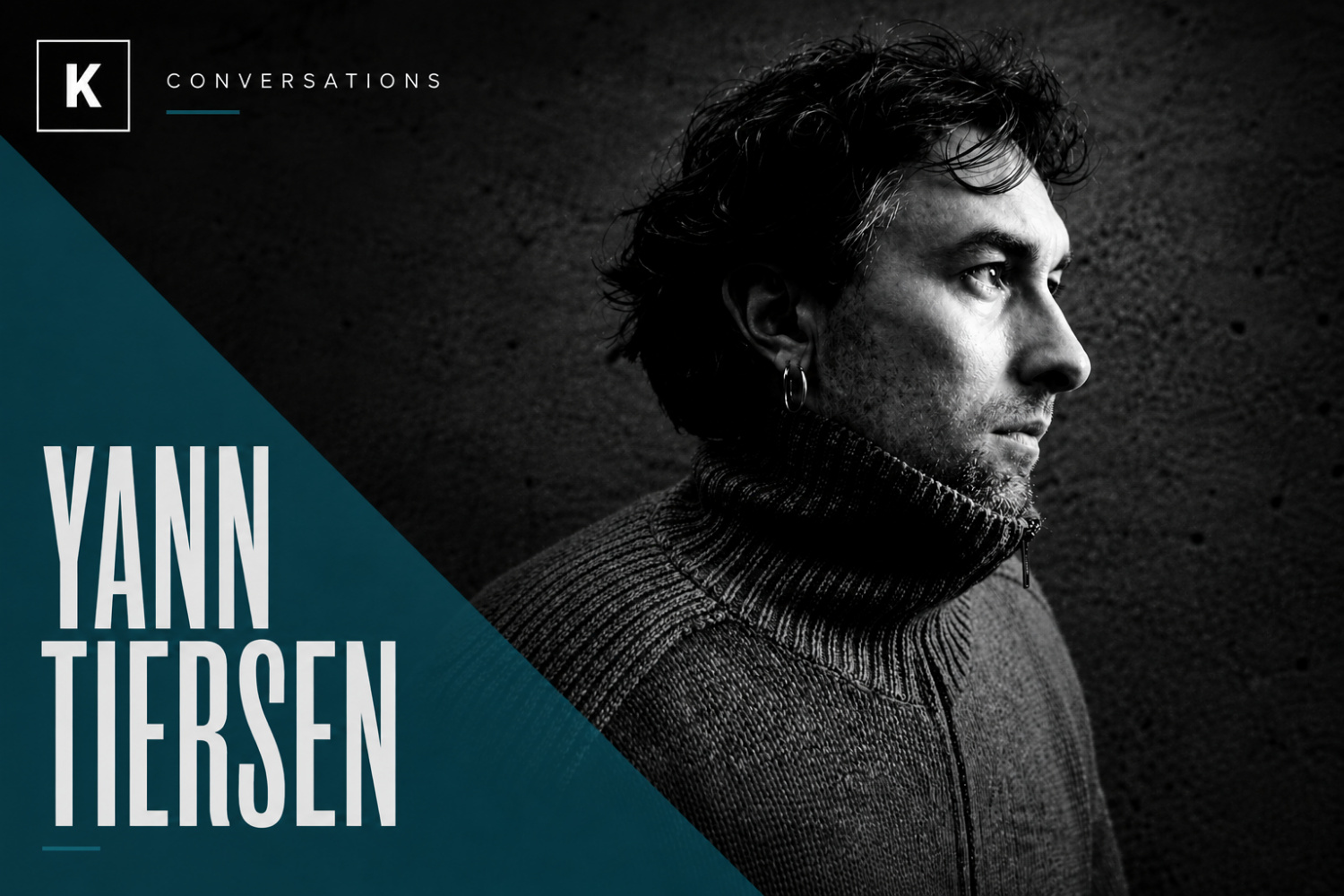
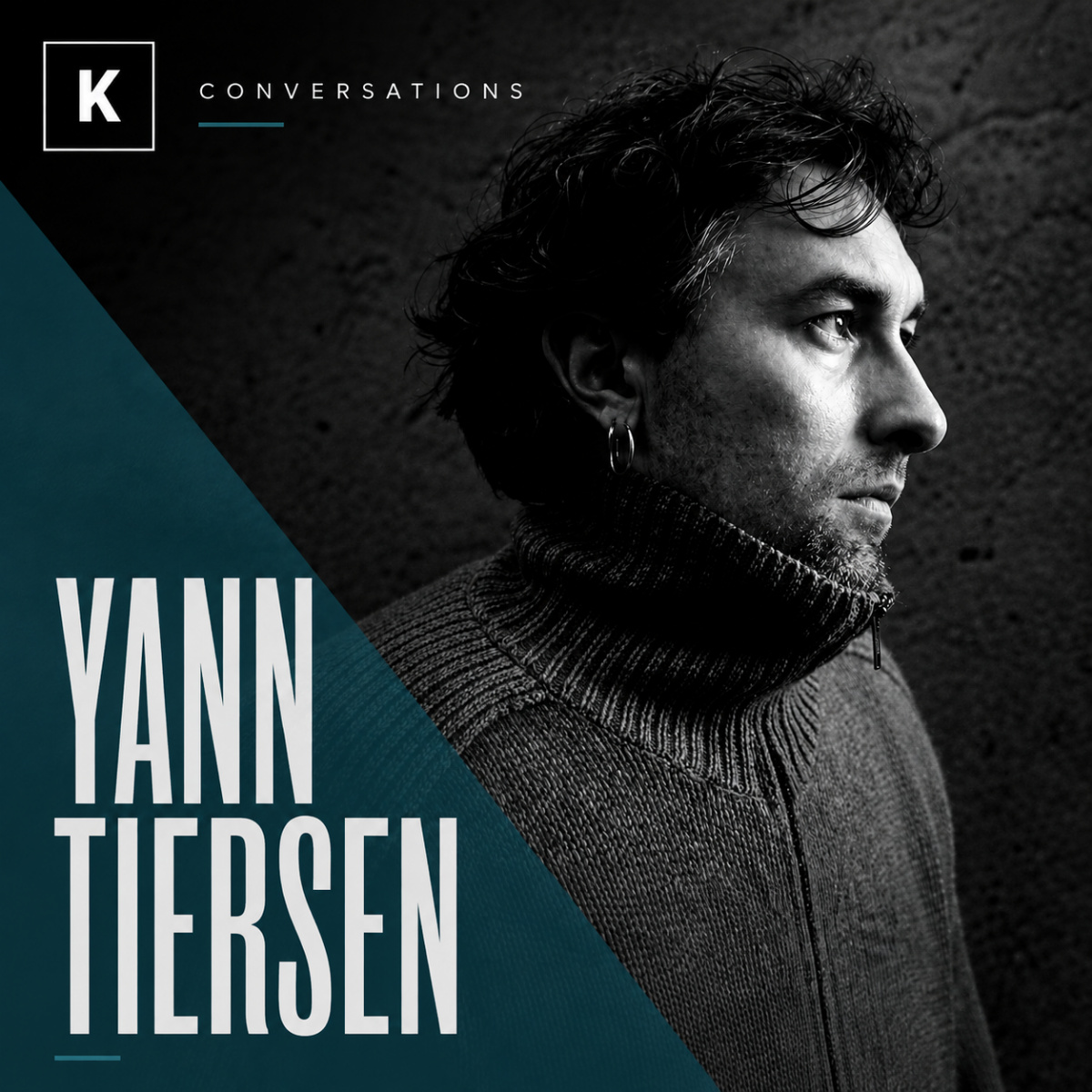
This interview was conducted by Eleni Mitsiaki, Editor-in-Chief of Kinetophone.
Recommendations for the (now) forty-something French composer are certainly unnecessary: his soundtrack for Amélie propelled him to international fame, even though it obscured the fact that a significant part of his discography honors a post-punk aesthetic and the spirit of the avant-garde, rather than being related to lyrical romanticism.
Q: Skyline, your 7th album, is a sonically multi-layered piece of work. How long did it take to create? Does the final result align with your initial plans?
A: Looking back, I have the feeling that the evolution of Skyline was quite fast. The basic form of the songs, their backbone, had been in my mind for a long time, but it was only last spring that I decided to focus on putting them together. Perhaps the enthusiasm with which I worked on this material also led to its quick completion. So, yes! I am completely satisfied and happy with the album!
Q: Tell us a little about the infamous ghost album! You often refer in your interviews to an acoustic album that would form the basis of a new release. Is that ultimately Skyline? And, if not, do you have enough unreleased material that you would like to share with us in the future?
A: Haha… I think this album will remain a ghost, for now! I never stopped working on it, and the ideas keep storing up in my mind… So, it is definitely not Skyline. But who knows, maybe it will be my next album, or the one after that!
Q: Let’s hope then that you will reveal this mysterious album to us soon!
A: Who knows! We’ll see! (laughs again)
Q: If Dust Lane marks your transition from your piano-driven, cinematic past into something new, does Skyline ultimately constitute a liberation from that past? Could you describe your new musical world for us?
A: I wouldn’t say it’s a new musical world… More like the continuation of a slow and steady musical evolution, from my first album to this latest one. I would say that Dust Lane marks a personal change. A slow change, which took place through five years of intensive work. Because that’s roughly how many years separate it from my previous album.
Q: You are a multi-instrumentalist who falls in passion with a new musical instrument every time. From the Ondes Martenot, the glockenspiel, the accordion, and the piano, to the old-fashioned synths and guitars of Skyline. Do you feel that you have settled on this sound, which will perhaps also characterize your next album?
A: I can’t reveal anything to you! (laughter)
Q: You like to wrap your future plans in a veil of mystery…
A: The truth is, I don’t know! Right now, I really love the feel of these specific sounds. Maybe in the future I’ll become passionate about something else. We’ll see!
Q: Where do you truly draw your inspiration from? Can you define any influences?
A: It’s difficult to pin down my influences exactly… Because they are a hodgepodge… Any stimulus, however, can function as a source of inspiration, subconsciously.
Q: Looking back in time, was there a defining moment in your life that prompted you to get involved with music?
A: For as long as I can remember, the idea of becoming a musician was always in my mind. So it wasn’t a sudden impulse. I feel like the decision was out there somewhere, waiting for me.
Q: But what initially prompted you to get involved with film music – did you start composing music for short films from an early age? And what ultimately distanced you from it? Are there plans for your participation in future soundtracks, or do you ultimately not care about being called a film composer?
A: If we exclude the music I did for some short films, my two real soundtracks were Good Bye, Lenin! and Tabarly. For me, film music does not constitute a separate musical language. They are songs, pieces that come together for a purpose – a film. Personally, I don’t consider myself to be writing film music. I just write music. So, I consider myself a bit of a fraud when a director asks me to write music for them, and I write the pieces or the songs and just hope they fit with the film. I am simply a musician, a composer. Not a director. I am not used to writing music with a scene or a film’s hero in mind. Compositionally, I don’t work that way. Of course, they often stick the label of film composer on me. But I’m not!
Q: So you follow the same compositional process whether you are writing music for a film or for a new album…
A: Exactly! Nothing changes in the way I write music.
Q: However, your music often has a dreamlike quality, and listening to it makes many people daydream! Did your childhood dreams have music? Do dreams play a role in musical creation?
A: Hmm… I think that when I work, I try to completely empty my mind. I don’t want to think about anything. Or, to put it better, I don’t want to daydream. Music for me is logical sequences. It has nothing to do with the subconscious.
Q: Do you follow the numerous new releases at all? Is there a favorite artist whom you prefer to listen to lately?
A: I can’t think of a name right now. Although my free time is limited, especially now that my album has just finished and I am on this long tour, I do listen to quite a few new releases. In fact, I continue to buy vinyl records – which I prefer – and when my time allows it, I also attend some concerts.
Q: So would you advise your fans to buy vinyl records? In these unbearable economic circumstances, shouldn’t music and art in general ultimately be accessible to those in need?
A: If you are a real music lover, then you buy vinyl records. There is no better choice in sound quality. That is also why I am against music leaks on the internet: free music destroys quality. If you have money, you buy vinyl records.
Q: The list of musicians with whom you have collaborated throughout the years of your career is impressive and keeps growing with each new album. On Skyline, you are collaborating for the first time with Efterklang and Peter Broderick. Tell us about this collaboration…
A: It was a very interesting collaboration! The last song on Skyline, titled “Vanishing Point”, is essentially a collage of the rest of the songs. So I thought of giving all the lyrics to Efterklang for them to add the vocal parts. The result was truly impressive.
Q: Is there a musician with whom you would really love to collaborate?
A: I would definitely like to make a second album with Shannon Wright…
Q: I feel that you are united with Greece by a special relationship of love! Can we take a sneak peek at your plans for the November 19th concert in Athens?
A: Indeed! I feel Greece like my home and it is always my pleasure to play in your country! Especially now – in fact, I want you to know that you have my sincere support in your efforts. As for the night in Athens, I can tell you that it will feature plenty of Skyline. I hope you enjoy it!
Q: Thank you very much for the interesting conversation. We will see you in Athens.
A: Thank you too!
Publication Note: Published on Avopolis in November 2011 on the occasion of the release of the album Skyline and his appearances in Greece (on Thursday 17/11 at the Bowling Centre in Larissa, 18/11 at the Principal in Thessaloniki, and finally on Saturday 19/11 at Fuzz in Athens).